

Bow Wow Film Fest: 5 years of film tours, first year going virtual
When the world changed seemingly overnight as COVID-19 infiltrated the US, events were canceled with vigor and all but essential business operations came to a halt. Businesses across the country (film tours included) were forced to make some tough decisions. A big question people were asking was, “What now?”. The team at Bow Wow Film Fest took a few simple steps to answer that question.
Going virtual opens up a whole new set of possibilities
A tough decision
When the weight of the reality of the COVID-19 pandemic and all it affected was realized, the team at Bow Wow Film Fest panicked. At this moment in time they had to decide if they would scrap the rest of their 5th film tour, or forge ahead in a different way. Many businesses faced this same tough decision: do they just sit and wait for the world to go back to normal, or do they put their heads together and find a solution? In this case, the Bow Wow team opted for the latter.
The Bow Wow Film Fest has been the premier traveling dog film festival in the US since 2014. This group uses their fun dog films to raise money and awareness for animal welfare and rescue groups across the country. With over five years of organizing these screenings in an in-person format in independent theaters and multiplexes across the US, going virtual meant flipping this event on its head.
It wasn’t an easy decision and Susan, the founder of The Bow Wow Film Fest, spent time researching possibilities. She knew going virtual was possible, but how? She called some colleagues, tuned in to other film festivals that have gone virtual, and started planning for their big shift in strategy.
One catch: Their target audience is not the most tech-savvy bunch, so how do you reach an audience with an online format when they aren’t great online?
The goal? Ticket sales. The solution? Eventgroove Virtual Events.
How they went virtual
Having never organized a virtual event before, the team at Bow Wow had to start from scratch, so they had some questions to think over.
What would a virtual film festival look like?
Would they schedule a time and stream the films live, or should they offer the films on demand as attendees purchase tickets?
How would they convince attendees to all tune in at the same time to watch?
Would these showings have the same impact they have when dog lovers gather together to admire and support the causes they love?
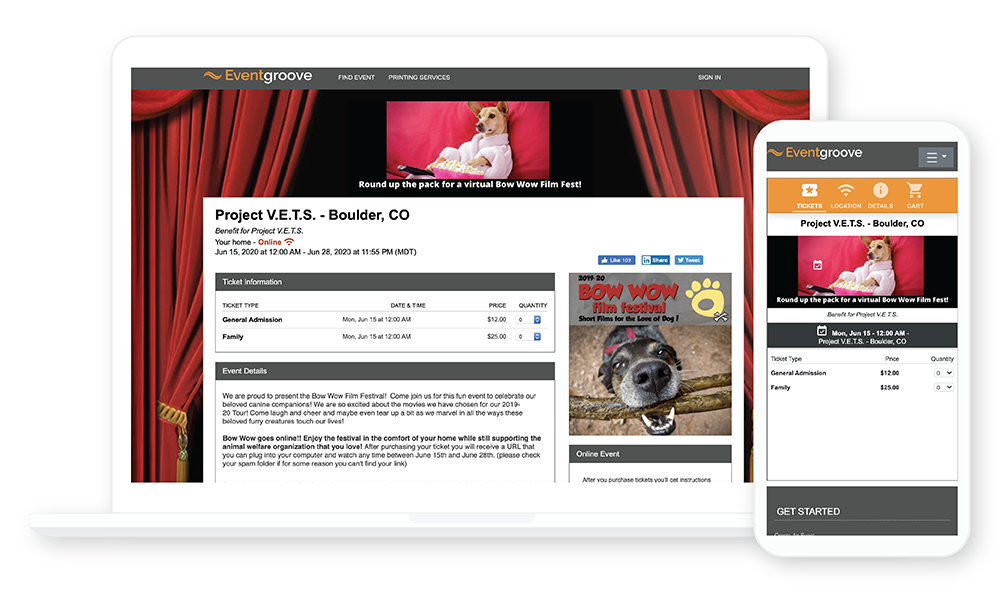
An Unexpected Bonus
Along with the great usability of the platform, the Bow Wow team found that offering virtual screenings actually allowed them to team up with and support much smaller organizations than they previously were able to with their in-person events.
Bow Wow had previously tried to figure out how to bring the smaller organizations on. They were so entrenched in their live model that virtual events hadn’t immediately occurred to them.
The issue was this: animal welfare organizations located in small or rural areas sometimes don’t have independent theaters or multiplexes where these film festivals are typically held. Bow Wow had previously brainstormed how to bring these smaller organizations on. They thought up some creative solutions, such as hosting the event in an outdoor setup. However, this wasn’t always an option since it posed its own problems: time of year, weather, etc.
Offering a virtual format opened up new opportunities to partner with and support these smaller organizations, some of which desperately need the support. This, Susan says, has been an unexpected bright light in this unanticipated necessary shift.
So far, The Bow Wow Film Fest has successfully hosted eight virtual film screenings for various animal rescue and welfare organizations spanning from Colorado to Tennessee, and they’ve got three more on the books!
So, why should you go virtual?
Whether you’re planning a film tour, an annual fundraiser, or a one-time event, adopting a virtual format creates new opportunities now more than ever. Check out the top benefits of going virtual below.
Extended reach
Your event is no longer limited by theater capacities or gathering restrictions. You can sell as many tickets as you want!
All in one place
When hosting online, there is no need to scout out the event space ahead of time, spend time setting up, etc. Simply list all your events (in-person and virtual) on one central event hub page that allows users to purchase and tune in on the same web-page.
Lower overhead
Virtual events are famously affordable to organize. There are simply less overhead costs that take away from the bottom line.
Valuable data
The great thing about everything being online is that everything is online! When you manage everything through one event hub, you gather rich, valuable consumer data that you can use to improve your future events.
Ready to dive in? Use our Virtual Events Checklist to start planning!




0 Comments